Table of contents:
Last month, I’ve finally completed what was, by a wide margin, my biggest web design project to date. For the past 2.5 years Masha and I have been running our own photo studio specialising in product photography. However, product shots aren’t the only thing we do. One of our biggest passions has become photographing abstract floral compositions. These shots serve no commercial purpose and are made solely for aesthetic exploration and practice. Nevertheless, we believe this work holds value not only for us but also for a wider audience seeking unique visual accents for their homes.

As a self-employed photographer, I believe the experience gained building this shop over the last several months could be valuable for other entrepreneurs, particularly those considering entering the expansive world of e-commerce. Creating an online shop is a complex undertaking that can be approached in many different ways. In this article, I’ll share my personal experience and the choices we made.
Our Goals
Today, it’s entirely possible to create a fully functioning and secure online shop within days or weeks, often without extensive technical knowledge, by using one of the many available ready-to-use platforms. However, this path expectedly involves compromises in terms of design flexibility, performance, and functionality. Still, it’s often the most straightforward solution for artists. In many cases, focusing on your core craft makes more sense than spending significant time figuring out technical details outside your primary business.
In our case, however, there were several key aspects we weren’t willing to compromise on. These included:
- A highly user-centric experience.
- A refined aesthetic aligned with our art.
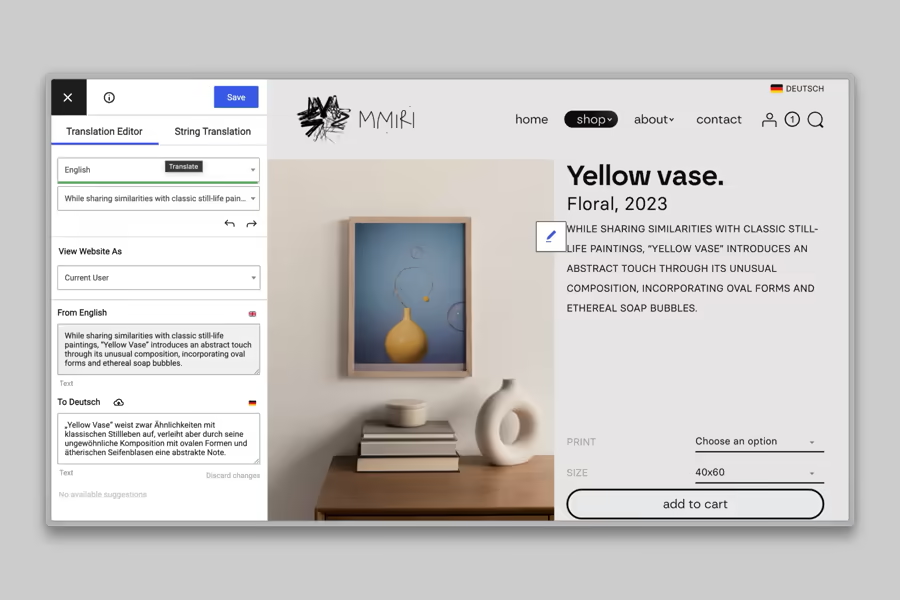
- Full localization for several international markets.
- Deep storytelling around our work and art in general.
- Selling fine art prints is a niche field in e-commerce, meaning high-quality, suitable templates are scarce. This scarcity is compounded by the fact that every art offering is unique and often requires a bespoke presentation. Ultimately, this led us to the conclusion that building our own online shop, tailored specifically to our unique needs, was the only way forward.
What Was Needed to Build It
Let’s break down the essential components required to build the shop we envisioned. I’ll categorize them into the necessary skills, the time commitment for different phases, and the financial investments made. By the end of this section, you’ll have a clear picture of the resources and skills involved. Even if you don’t plan to handle everything yourself, the experience shared here can provide a useful overview for your own planning.
Essential Skills
First, I’ll list the crucial skills needed and rate their importance on a scale of one (⭐) to five (⭐⭐⭐⭐⭐). A single “⭐” indicates basic understanding is sufficient, while “⭐⭐⭐⭐⭐” signifies the skill was absolutely critical to completing the project successfully.
Design ⭐⭐⭐⭐⭐
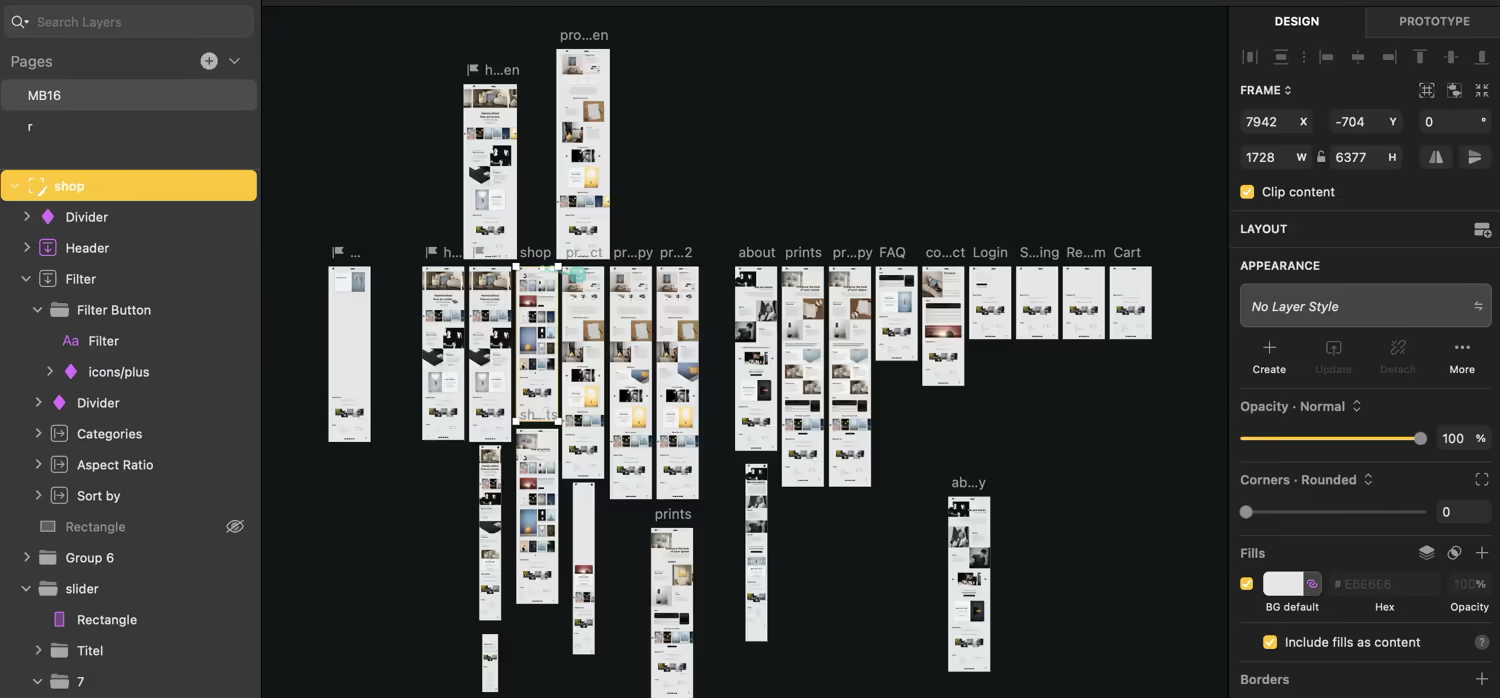
Although I don’t primarily identify as a graphic designer, aesthetics are fundamental to my work as a photographer. As such, I couldn’t release something that didn’t meet the same visual standard as the art itself. I consider a custom, refined design crucial in our particular field. During the shop build process, a significant amount of time was dedicated to designing the prototype. I used Sketch for this, an offline, Mac-based alternative to the popular web-based Figma. As a native Mac app, Sketch offers excellent performance, boosting productivity.
Coding ⭐⭐⭐⭐
Numerous “no-code” tools exist today. They typically generate code based on common patterns intended to fit most users’ needs. The challenge arises when these patterns don’t perfectly match your specific requirements. You can get stuck trying to overcome the platform’s limitations to achieve your desired outcome. The platform initially promising time and resource savings can end up consuming more of both, often yielding mediocre results. It might suffice if “good enough” is acceptable, but it rarely leads to a perfect, tailored solution. Additionally, most “no-code” tools introduce significant overhead, potentially impacting performance, especially for projects more complex than a simple brochure-style site.
On the other hand, coding an online shop entirely from scratch would be overkill for most entrepreneurs. You likely don’t plan to become a full-stack software engineer just for one shop, nor do you want to spend countless hours over the next decade maintaining custom code.
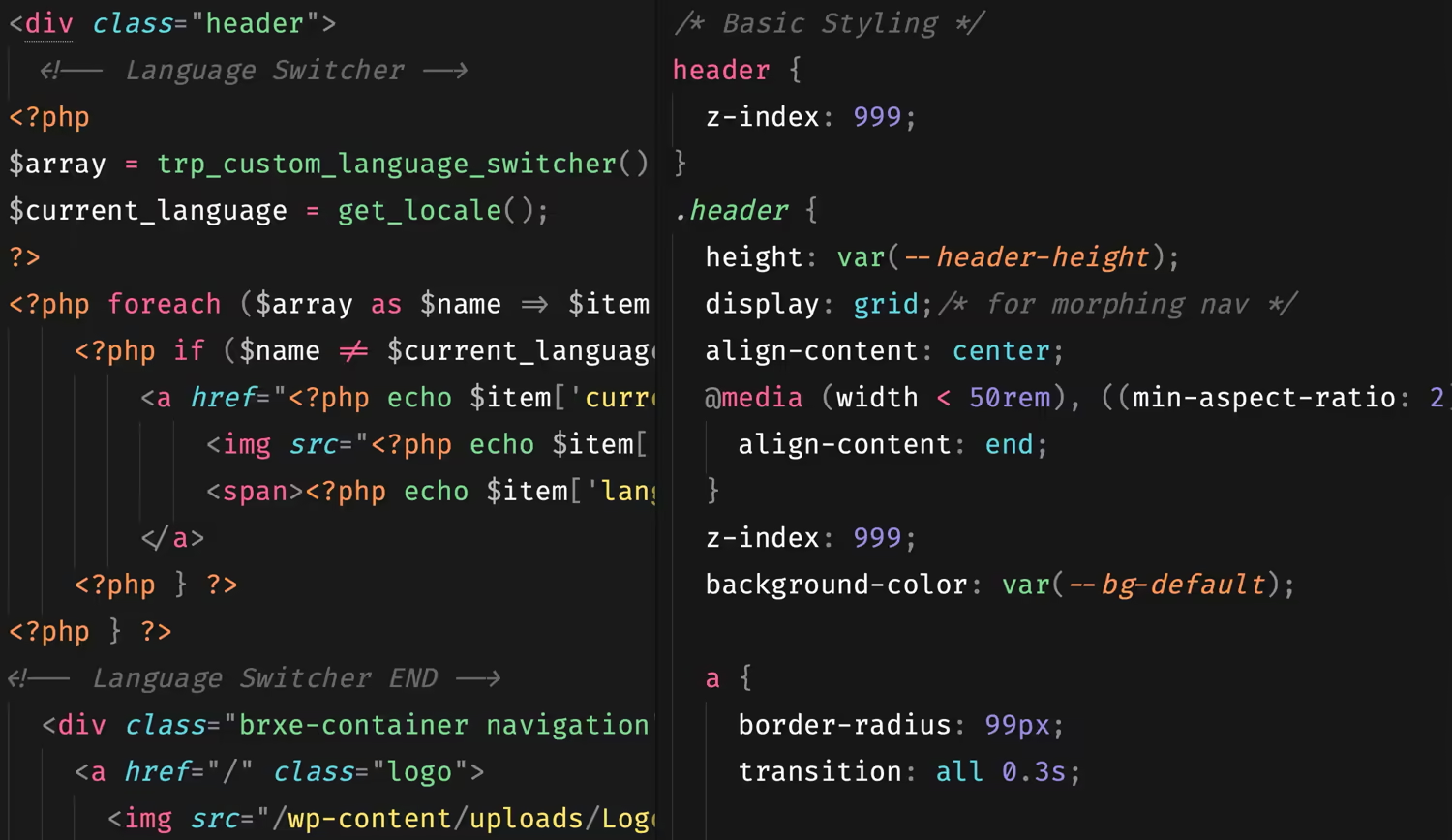
That’s why we went the middle route. We chose WordPress (our Content Management System – CMS) and WooCommerce (our e-commerce platform) as our foundation. We then invested our saved time and energy into a completely custom design and user experience built upon this base. This way, we’re using a proven, secure, and relatively easy-to-maintain tool stack. Although WordPress has potential performance shortcomings, these can often be mitigated with quality hosting. With that in mind, these were the key coding skills involved:
- CSS: ⭐⭐⭐⭐ (Crucial for implementing the custom design)
- JavaScript (JS): ⭐⭐⭐ (For interactive elements and enhanced user experience)
- PHP: ⭐⭐ (For minor customizations within WordPress/themes)
- ChatGPT/AI Assistance: ⭐⭐⭐ (While AI doesn’t replace coding skills yet, it proved immensely helpful for generating snippets, debugging, and explaining concepts. It’s most effective when you understand the basics of the programming languages involved.)
Content Creation ⭐⭐⭐⭐⭐
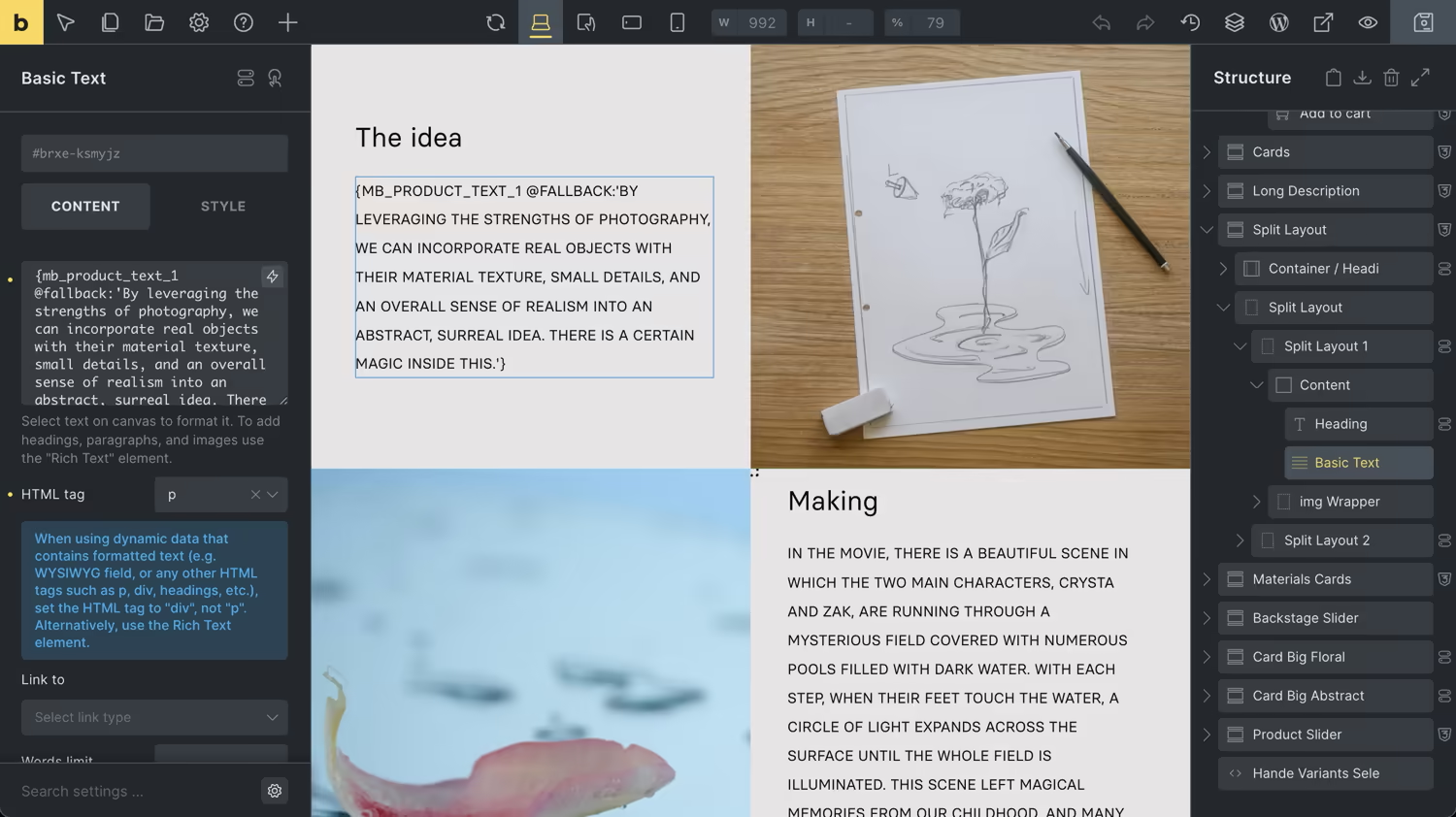
We all know the saying: “content is king.” As an online art gallery, it’s no surprise the project is image-heavy. I’m not just talking about the photographs being sold as products (discussing their artistic creation is outside this article’s scope), but all the supporting imagery. Each artwork requires at least seven distinct product images, including different variations and in-situ shots showing the artwork displayed. Additionally, there are numerous images documenting the creation process, bringing the total image count per product to potentially 15-20. All these images are needed to populate product pages dynamically and tell a compelling story. Overall, the ability to create high-quality images, develop a consistent visual style guide, and edit effectively (e.g., in Photoshop) was essential.
In addition to images, there are four core texts for each product: short and long descriptions, and narratives detailing the creative process behind each work. This resulted in over 100 unique pieces of text for the entire website. Honestly, writing all this text was significantly more time-consuming than creating the product shots. I don’t believe ChatGPT can write compelling, nuanced art descriptions entirely on its own yet, but it was a tremendous help for correcting and refining the text, especially since I’m not a native speaker of any language the shop supports. Speaking of which, all content, originally written in English, was later translated into German. While AI handled the bulk of the translation, manual review and overrides were crucial for ensuring high-quality, nuanced content.
Time Commitment
I wasn’t working on this project full-time, as I was still managing my regular photography work. Overall, the project took nearly three months from initial prototyping to final launch. Working full-time, I estimate it would have taken 1.5 to 2 months, minimum.
Here’s a rough breakdown:
- Concept Development & Design (Sketch): ~2-3 weeks
- Shop Build (WordPress, SureCart, Custom Theme): ~3 weeks
- Content Creation (Text & Images): ~4+ weeks (This was the most time-consuming phase)
- Final Changes, Optimization & Bug Fixing: ~2-3 weeks (This phase took slightly longer for me due to intervening client projects).
Financial Investments
It’s theoretically possible to build an online store without spending any money upfront, but you’ll likely invest significantly more time. What you typically pay for with tools and services are convenience, time savings, or compensation for lacking certain skills. This is perfectly reasonable – it’s simply about allocating resources efficiently. If we had the budget to hire an agency or freelancer to build the shop from scratch, that would have been a perfectly valid option, potentially more valuable in the long run, as it frees up time to focus on creating content. However, this option can be significantly expensive. Therefore, I’ll detail the costs associated with our “middle way” approach.
Here’s a breakdown:
Hosting: We currently use shared hosting from a provider (All-Inkl) offering excellent value in Germany. We pay only €10/month for hosting unlimited websites, including 10 domain names – a package deal where the domains effectively cover the cost. Therefore, the hosting cost itself is negligible for this single project. If performance becomes a bottleneck, the next step would be upgrading to a Virtual Private Server (VPS), likely costing around €10-20/month.
Platform & Plugins: WordPress (our CMS) and WooCommerce (our e-commerce solution) are fundamentally free. However, we utilize several paid plugins and services for specific functionalities. These were primarily one-time purchases (lifetime deals), so there are minimal recurring software costs:
Bricks Builder (Theme/Page Builder): €250 (Lifetime license, purchased previously for another project)
Acumbamail (Newsletter Service): €160 (Lifetime deal)
VividBackups Pro (Backup Solution): €160 (Lifetime deal – chosen for specific GDPR compliance needs)
AnalyticsWP (Privacy-focused Analytics): €170 (Lifetime deal)
Total Software Investment: Roughly €940 (one-time costs)
Note: It’s important to mention that we use these licenses across multiple websites (currently six), significantly increasing their cost-value ratio per site.
Fonts: I love fonts; they are a crucial part of my design process, and I’m willing to invest in them, both financially and in terms of potential (though minimal) performance impact. My favorite typography foundry, whose work I greatly admire, is Atipo Foundry (https://www.atipofoundry.com/). For this project, I exclusively used their fonts. For the three font families used, the one-time cost was around €50-60. This is an excellent value considering their quality. These fonts add approximately 30kb to the site’s frontend load – a small price to pay for the visual refinement they offer.
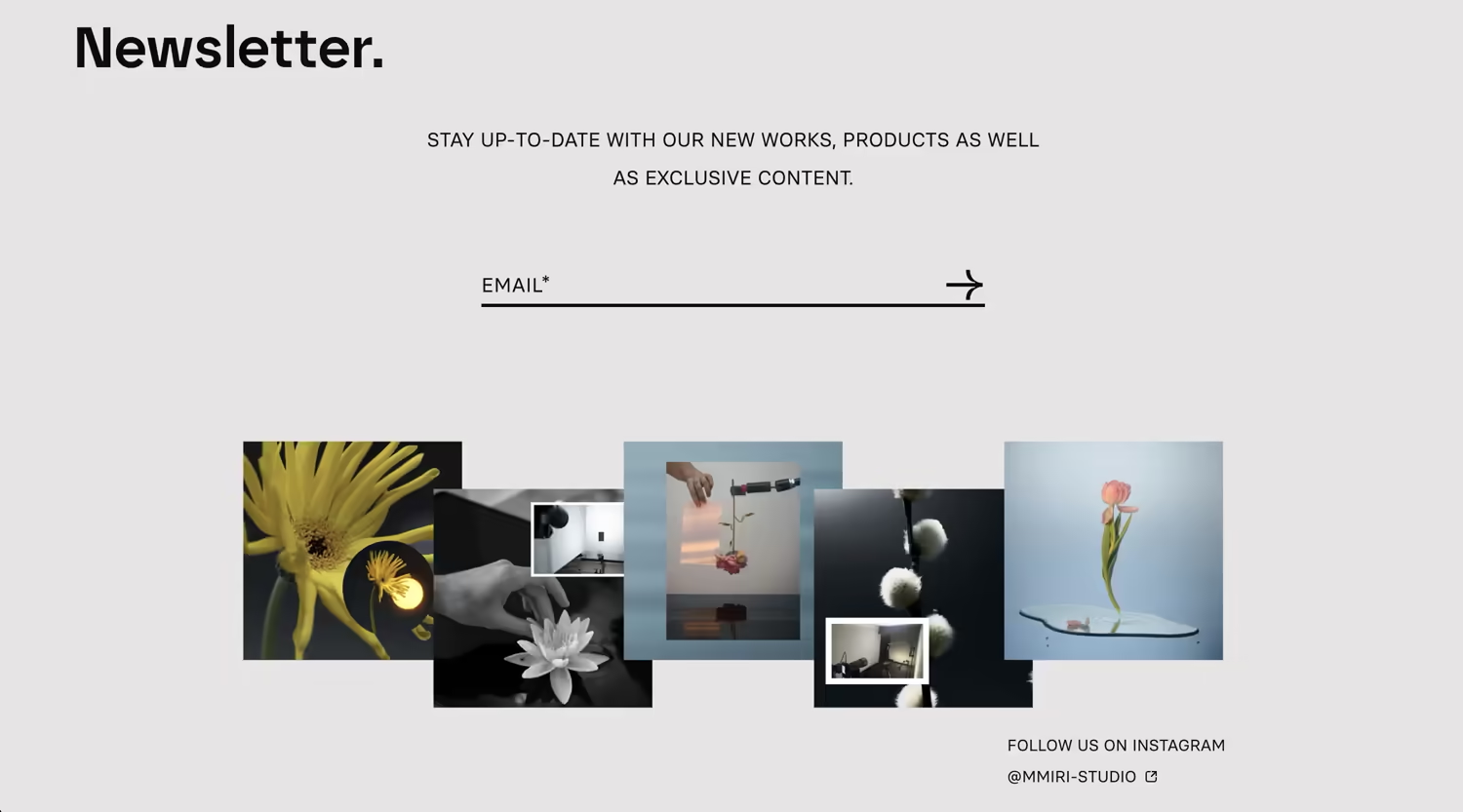
Mockups: As a photographer, my standards for imagery are necessarily high. Simultaneously, I needed an economical solution for product presentation. Photographing high-quality, in-situ mockups for over 30 artworks, including numerous variants, would have been tremendously time-consuming and costly, likely delaying the launch by months. This is partly because I lack access to the variety of high-end interiors needed for convincing shots. Finding high-quality photo-based mockups proved surprisingly difficult. I specifically wanted to avoid 3D renders and AI-generated images. Once your eye is trained, even high-quality 3D renders often lack the subtle realism of photography; they can feel sterile, lacking the lifelike details inherent in real environments. This decision ruled out the vast majority (perhaps >75%) of mockups available online. Fortunately, I found two excellent studios catering to this need:
For ambient/lifestyle shots: Moyo Studio (http://moyo-studio.com)
For close-ups and displaying variants: Creatsy (https://creatsy.com/)
The total investment in mockups was approximately €150-200.
Final Words
Several months post-launch, the project is complete, and I’m very proud of the result. For me, it was a new, exciting, and enriching experience. However, I must admit I underestimated the total effort required to reach the finish line.
For many entrepreneurs, using an established platform like Shopify with a quality template, and dedicating the saved development time to content creation, might be a more efficient path. In our case, achieving a custom user experience aligned with our specific vision was paramount, extending to the online shop itself.
Additionally, practical considerations played a role. Our studio is difficult and expensive to heat adequately during the German winter, limiting our photography work during those months. Therefore, investing time in building a high-quality online shop during the colder, slower photography season felt like a productive use of our resources.